


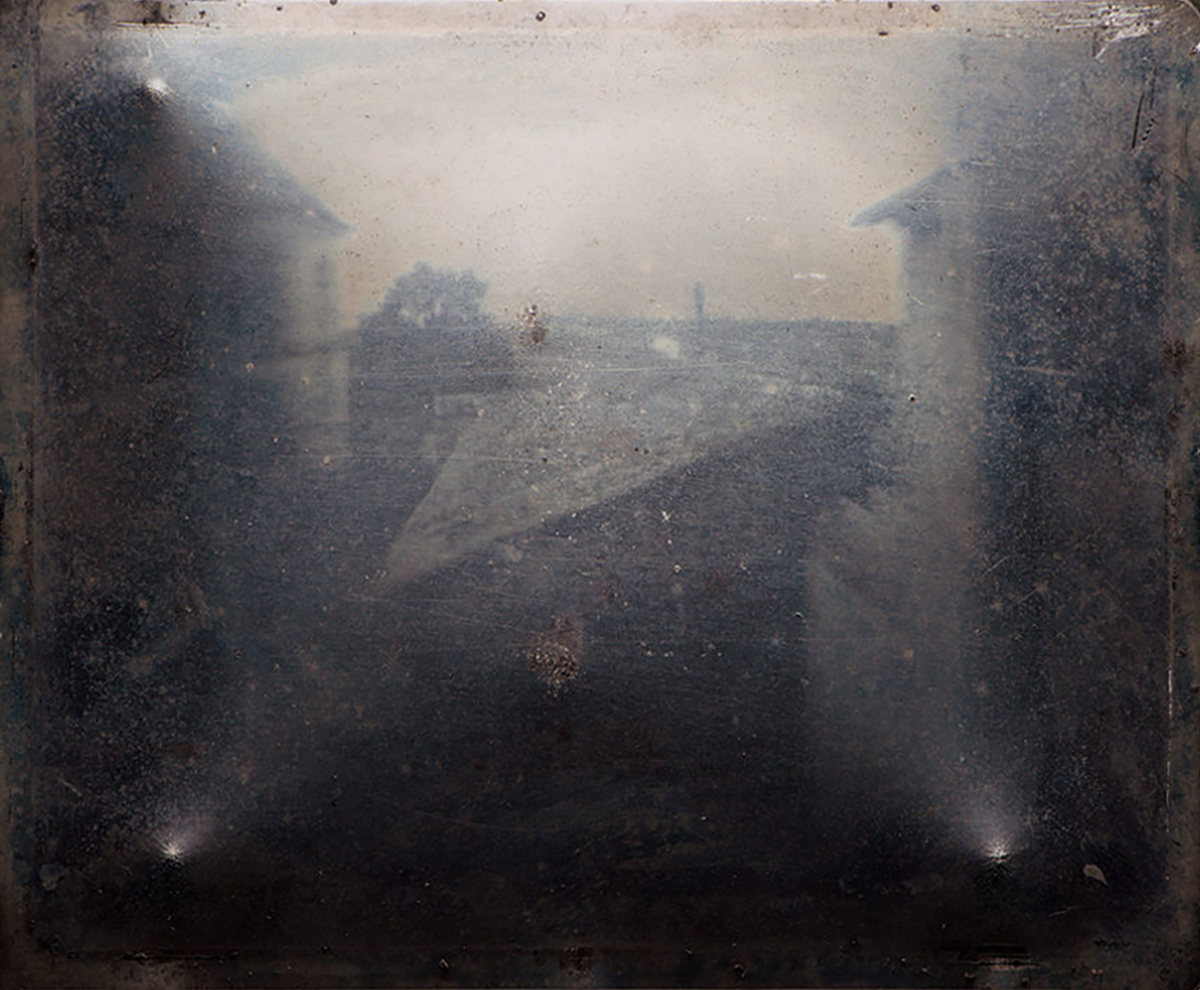
The first photograph was taken by Nicéphore Niépce in 1827. It shows the view from a second-floor window of his house and the surrounding countryside. The sandy 20×25 centimeters image marks the genesis of a cultural transformation that made visual storytelling the preferred means for crafting a persuasive argument on most anything.
Sun Writing
When Nicéphore took the picture, it was already known that an image could be created using the bleaching effects of light. In fact, Nicéphore refers to the process he used to take the first photograph as heliography. Which exactly means “sun writing”. His contribution was to come up with a way that would make the fleeting images permanent – to fix the image.
The rudimentary technology that was available required making a very, long exposure to take the first photograph. He left the camera pointing to his backyard for several days and nights. Until one evening Nicéphore decided to take out the thin leaf of tin he had coated with a concoction of Bitumen of Judea. A naturally occurring asphalt and rinsed it with turpentine. Then, and this we need to imagine, he sat down stunned with amazement, his hands holding the first record of the ephemeral passing of time.

Cultural Revolution
Things really took off after the first photograph. A torrent of developments would first make taking pictures easy and become the people’s art form. Subsequent innovations such as motion pictures, television, and camera phones ignited the unstoppable cultural revolution of the 20th century. The ability to reproduce what we see changed it all. Think about it, TikTok influencers, NFL instant replays and looking into distant galaxies. All are result of the events that took place in that early spring day when Nicéphore took a picture of his backyard.
mariano p