

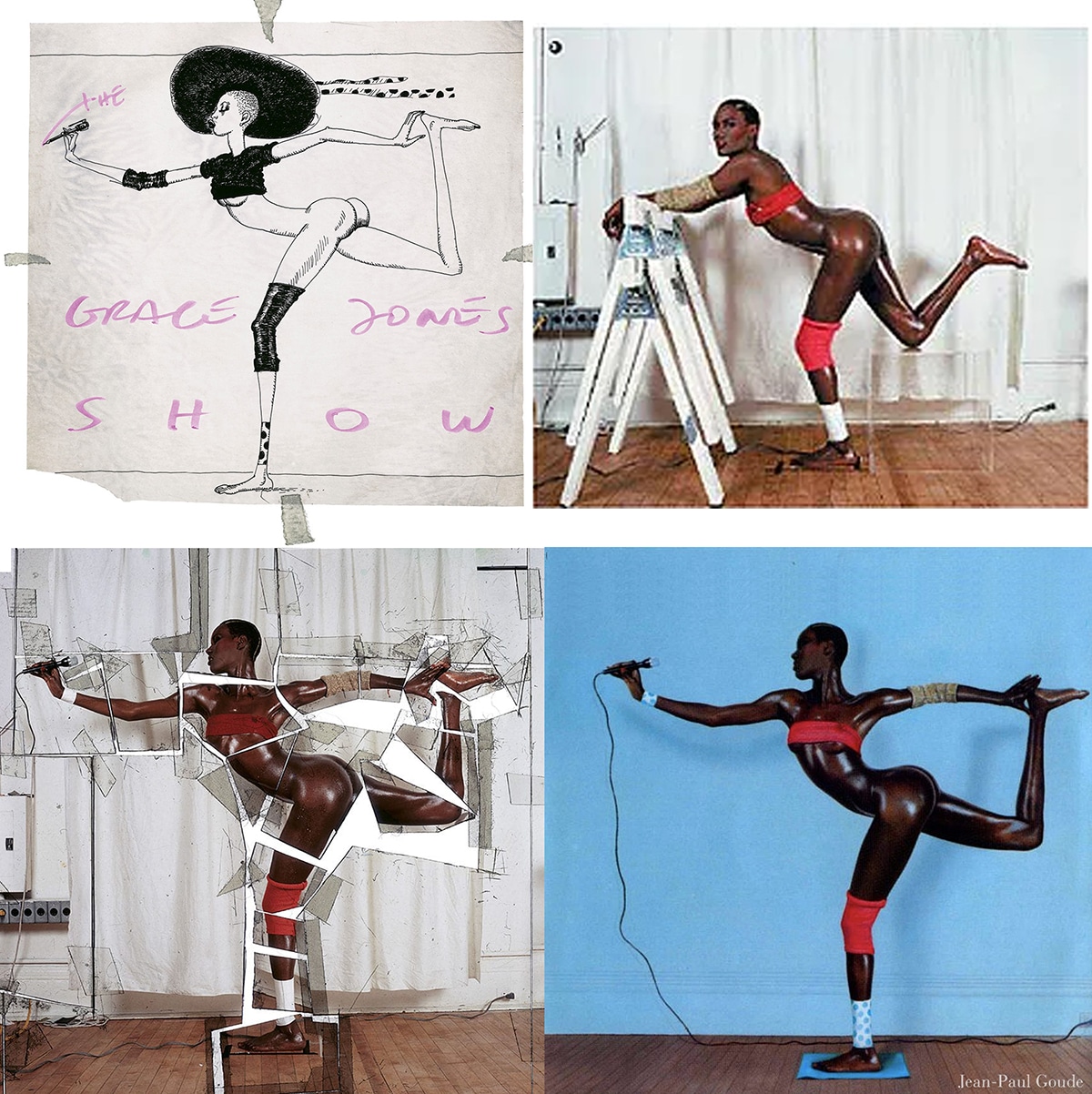
Many consider the photograph of an oiled-up Grace Jones on the cover of her album “Island Life” to be one of the most significant images of the late 20th Century. When it appeared, the picture was strikingly different. Now, with the hindsight of a Monday morning quarterback, we see that like a crystal ball was forecasting the changes to the aesthetics of marketing that were about to come.
Jean-Paul Goude enhanced features of Grace Jones’ body and put her in a seemingly impossible pose by combining various photographs. He skillfully cut, overlapped, taped and airbrushed gaps between the pieces of film to create a believable illusion. Photomontages were first used in the mid-19th century as a way to create out of the ordinary images. Today, although technically incorrect, we now call this type of picture Photoshopping.
First chic – rapidly passé.
Once the domain of a small number of skillful artists the process was made easy by digital software. After Photoshop made the technique accessible to anybody the exclusivity that it brought to a marketing image was over. Photoshopping run the normal cycle of any other popular trend. First chic – rapidly passé.
Be as it may, it was the photomontage of Grace Jones that served as the inspiration for the unimaginably long-legged models that started to appear on the pages of fashion magazines in the 90’s and that later started the whole hoopla that would make Photoshopping politically incorrect.
Above the fray, unscathed, Jean-Paul went on creating occasionally controversial photomontages. Citroën, Chanel, Shiseido, Kenzo, Cacharel, Perrier all believed that special talent deserves special treatment. Recently, his Paper Magazine cover of a nude Kim Kardashian was liked 762,000 times on Instagram, sparked 173,000 comments and was mentioned 178,000 times on Twitter.
mariano p