

The campaign that saved Chanel may be one of the most extraordinary accounts in the history of beauty marketing. In the early 1970’s N˚5, long regarded as a symbol of exclusivity run the risk of becoming outdated.
Instead of succumbing to panic, Chanel’s management saw the challenge as an opportunity and took insightful action. Their 1974 campaign was visionary and immensely successful, revitalizing the allure of the world’s most renowned perfume and establishing a marketing trajectory that the brand still follows today.
The price of success.
When Coco Chanel launched N˚5 in 1921 her marketing approach was what we now term BTL. She would host intimate dinners for a select group of friends from high society. At some point during the evening, she would surprise her guests by spraying them with the perfume and giving away few bottles. Additionally, she infused the dressing rooms of her boutiques with the fragrance to create consumer awareness. In the small circle of Parisian high society Chanel N˚5 become an immediate hit. With a limited production the scarcity of the product made it very desirable. Coco’s friend, Misia Sert once said: “A bottle was like having a winning lottery ticket.”
It wasn’t until 1924, when Parfums Chanel become a corporate entity, that expanding sales beyond the Paris boutiques become a goal. Advertisements in the United States appeared in “The New York Times” in 1934. Initially, the advertising strategy aimed to preserve the sense of exclusivity that had contributed to the perfume’s success. Ads were discreet, sporadic, and deliberately limited.
However, over subsequent years, as the number of sales outlets multiplied and marketing efforts targeted broader audiences, the original message became diluted. By the late 1960s, the sophisticated allure of the perfume had faded, and N˚5 was starting to be perceived as a mass-market fragrance.

Balls.
CEO Jacques Wertheimer saw the potential the perfume had and put in action a bold plan that would elevate the perfume from a stumbling product into the iconic cornerstone of the Chanel brand. The transformation demanded a significant shift in strategy, risking substantial losses. Wertheimer removed N˚5 from drugstore shelves and cut the number of outlets carrying the fragrance from 18,000 to 12,000. He also eliminated outside advertising agencies and entrusted all creative decisions, including advertising, to in-house artistic director Jacques Helleu. A decision that would prove to be his most insightful move.
Marketing would now reflect Coco Chanel’s original vision of glamour and sophistication. Over the next four decades, Helleu would create the images that established Chanel as a prestigious consumer brand but also influenced the way luxury marketing looked as a whole.

“pure transparency… an invisible bottle”
For N˚5 Coco Chanel wanted a bottle design that was the antithesis of the style in fashion at the time. She decided on an unpretentious container that was about “pure transparency …an invisible bottle”. Fifty years later, it was in this description where Helleu found the inspiration for the marketing images that would restore the brand.
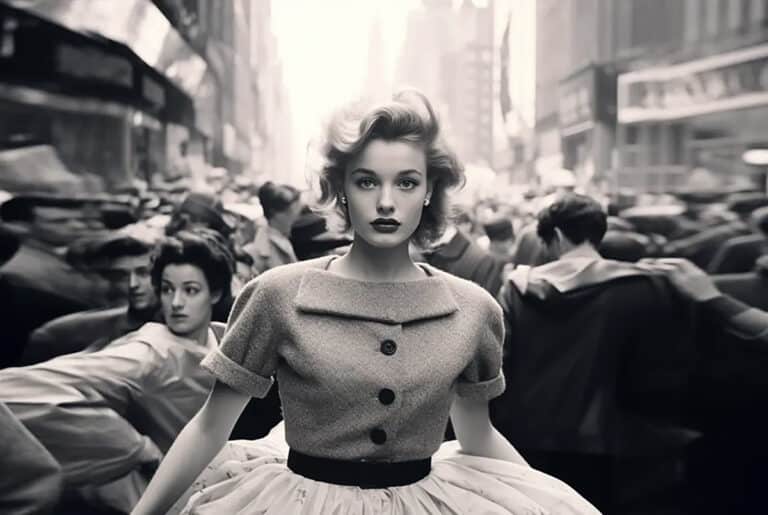
The concept was appealing but it was Helleu’s extraordinary creative execution what turned it into a success. To create a sense of simplicity and clarity he used high-contrast black and white photographs. Ads did not use slogans or taglines, they run without headlines or copy.
For the now famous original campaign Helleu chose to work with photographer Richard Avedon who believed that a successful marketing image needed to have an underlying narrative that wasn’t about selling but rather to create an overall spirit that would help connect with the moment in the photograph. One of his techniques was to give a humanistic feel to his photographs by featuring the personality of the model, including flaws.
Catherine Deneuve, then thirty years old, became the face of the brand for the start of the new era. Deneuve was little known in the US but her participation in the N˚5 campaign would not only make Chanel sales soar, but the American press nominated her as the world’s most elegant woman and the French government chose her to represent Marianne, the national symbol of the Republic.
Through the 1970’s the collaboration of Helleu, Avedon and Deneuve would create images of exceptional simplicity and grace, some of the most powerful and enduring photographs in the story of beauty marketing.

The moral of the story.
The marketing concept of the campaign that saved Chanel proved to be so successful that the brand kept using it. Year after year, transforming it into a recognizable timeless style. Chanel’s marketing visuals become a harmonious, unbroken, narrative. Older photographs giving depth to newer ones, shielding the brand from short-lived trends.
In subsequent campaigns, Helleu ingeniously revisited original compositions that reflected changing times, always keeping an emphasis on simplicity. Throughout 40 years his open collaboration with famous models and exceptional photographers let the style stay fresh and help cement the brand as a synonymous with elegance.
mariano p